Source stainless steel gas hob for Built-in, Slide-in, and Panel Installations
Explore 30 stainless steel gas hob options featuring varied burner counts and ignition modes. Buyers can compare specifications, dimensions, and certifications from Guangdong manufacturers to find suitable built-in or slide-in cooking solutions.
Key considerations
Products List


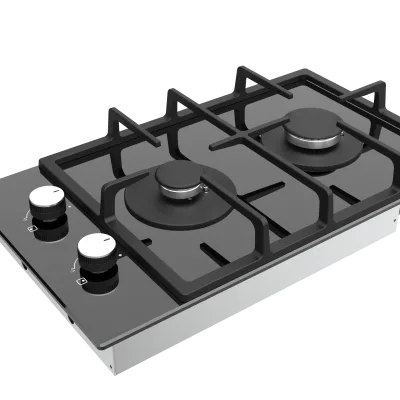


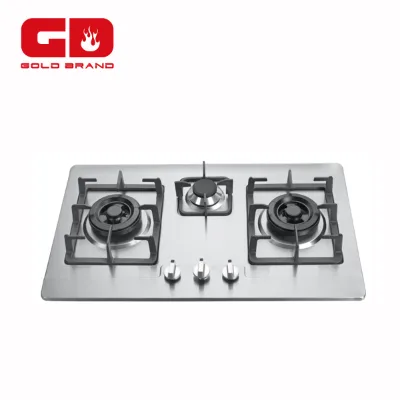
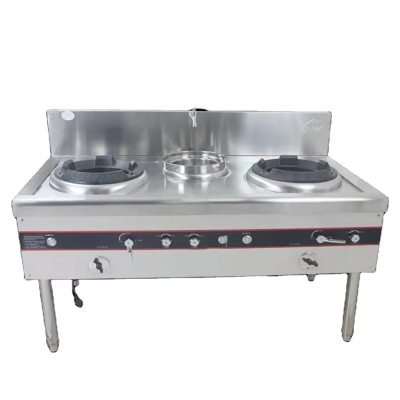
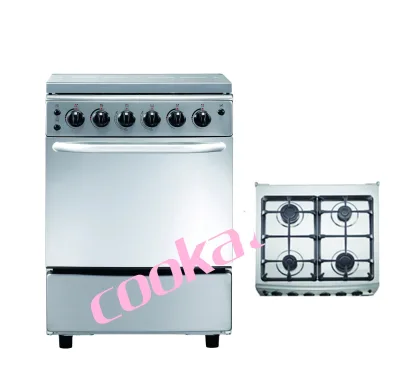
Comprehensive Sourcing Guide
Strategic Sourcing Guide for Stainless Steel Gas Hobs
The global market for built-in cooking appliances continues to prioritize durability, aesthetic integration, and operational efficiency. Among the various configurations available, the stainless steel gas hob represents a dominant segment in professional and high-end residential kitchens. Buyers entering this procurement channel must navigate a landscape defined by specific material standards, diverse ignition technologies, and varying fuel requirements. This guide synthesizes observed market data to provide a disciplined framework for evaluating suppliers and selecting products that meet rigorous operational demands without relying on unverified claims.
Technical Specifications and Material Integrity
The foundation of a reliable gas hob lies in its construction materials and burner configuration. The supplied market data indicates a strong prevalence of stainless steel as the primary material for both the panel and the body. Specifically, observations note attributes such as "Stainless Steel Body" and "Panel: Ss," which are critical for resistance to corrosion, heat, and chemical cleaning agents. The standard dimensions observed in the current inventory range significantly, with specific models adhering to standards like 310x520x115mm, 600x520x115mm, and larger configurations up to 990x520x115mm. These dimensions dictate the cutout requirements for kitchen countertops, making precise verification essential before ordering.
Burner configuration varies widely across the product range. Data points reveal units ranging from 2 burners to 5 burners, with specific models identified as "Front Control 5 Burner Gas Stove." The power output for these units is similarly diverse, with observed specifications including configurations like 3.3/3.0/1.75/1.75/1.0kw and 3.3/1.75/1.75/1.0kw. Buyers must correlate these power ratings with their intended culinary volume; high-output burners (often exceeding 3.3kw) are suitable for rapid boiling, while lower outputs support simmering. Furthermore, the pan support mechanism is a critical technical detail, with some units explicitly featuring "Cast Iron Pan Support," which ensures stability for heavy cookware. The ignition modes observed include "Pulse-Jet Ignition," "Electronic Ignition," and "Piezoelectric Ceramic Ignition." Each mode offers distinct reliability profiles; electronic systems often provide convenience, while piezoelectric systems offer mechanical redundancy in the event of power failure.
Fuel Compatibility and Operational Standards
Fuel type is a primary determinant of product suitability and regulatory compliance. The market data explicitly distinguishes between "Liquefied Gas" and "Natural Gas" as the primary fuel sources. This distinction is not merely semantic but dictates the internal orifice size and pressure regulation requirements of the appliance. A unit designed for liquefied gas will not function correctly or safely on natural gas without specific modification, and vice versa. Procurement teams must verify the fuel type specification against the local infrastructure before finalizing any order.
Installation methods also vary, with the data indicating support for "Built-in" and "Slide-in" configurations. This flexibility allows for integration into various kitchen cabinetry styles. However, the physical dimensions provided, such as the standard 310520115mm or 860510115mm, must be cross-referenced with the specific cutout templates of the target kitchen design. The "Transportation Brown Carton" and "Standard Carton with Foam" packaging details suggest that the units are designed for export, requiring careful handling to prevent surface scratches on the stainless steel finish during transit.
Compliance, Certification, and Safety Standards
In the B2B procurement of gas appliances, certification is not optional; it is a prerequisite for market entry and insurance coverage. The observed product data lists a robust array of certifications, including "CB, CE, RoHS, Saso, UL, UR." These acronyms represent compliance with international safety and environmental standards. CE indicates conformity with European health, safety, and environmental protection standards, while UL and UR are critical for North American markets, signifying testing by Underwriters Laboratories. RoHS compliance ensures the product is free of specific hazardous materials, which is increasingly mandated in global supply chains.
Additionally, the data references "CE \BV\SGS" and "Standards: CE," highlighting the involvement of third-party inspection bodies like SGS and BV (Bureau Veritas). For buyers targeting specific regions, such as the Middle East, the mention of "Saso" (Saudi Standards, Metrology and Quality Organization) is particularly relevant. It is imperative for buyers to request current, valid certification documents for the specific model number (e.g., JY-S2001, JY-ES5008, HY 6) rather than relying on general brand claims. The warranty period observed in the data is consistently listed as "2 Year," which serves as a baseline indicator of the manufacturer's confidence in product longevity, though this should be verified against the specific contract terms.
Cost Drivers and Pricing Dynamics
The pricing for stainless steel gas hobs in the observed market spans a wide range, from 6.5 USD to 1025 USD. This variance is driven by several factors, including the number of burners, the complexity of the ignition system, the quality of the stainless steel grade, and the inclusion of advanced functions. For instance, models featuring "Selfcleaning," "with Grill," or "with Steam Oven" capabilities command a premium over basic cooktops. The power source is listed as "Gas" for the majority of units, but some entries note "Electricity," suggesting hybrid or induction-assisted models may exist in the broader catalog, which would significantly alter the cost structure.
Minimum Order Quantities (MOQ) also influence the unit cost, with observed ranges from 1 to 1000 units. Buyers purchasing in bulk can often negotiate better pricing tiers, while those seeking single-unit prototypes or small batch replacements will face higher per-unit costs. The "OEM/ODM" brand attribute indicates that many suppliers offer private labeling, which can affect the final price due to tooling and branding costs. Additionally, the "SKD/CKD" (Semi-Knocked Down / Completely Knocked Down) availability suggests that buyers can opt for kits to reduce shipping volume and tariffs, potentially lowering the landed cost despite higher assembly labor requirements.
Supplier Evaluation and Origin Verification
Geographic origin plays a significant role in the supply chain dynamics of gas appliances. The data consistently points to "Guangdong" and "Guangdong China (Mainland)" as the primary places of origin. This region is a recognized hub for kitchen appliance manufacturing, offering a mature ecosystem of component suppliers and logistics networks. However, buyers must verify the specific factory location and capacity, as "Guangdong" is a large province with varying levels of industrial maturity.
When evaluating suppliers, the "Brand Name: OEM/ODM" attribute suggests that many manufacturers operate as white-label producers. Buyers should prioritize suppliers who demonstrate transparency in their manufacturing process and quality control protocols. The presence of specific model numbers like "JY-S2004" and "HY 6" indicates a structured product line, which is a positive sign of organizational maturity. Buyers should also inquire about the "prod_packing" details, such as the "5 Layer Strong Exported Brown Carton," to ensure that the packaging is sufficient to protect the stainless steel finish during long-distance shipping.
Quality Control and Long-Term Procurement Considerations
Ensuring long-term reliability requires a proactive approach to quality control. The "2 Year Warranty" is a standard offering, but buyers should investigate the scope of this coverage. Does it cover the ignition system? The gas valves? The stainless steel finish? The "Cast Iron Pan Support" mentioned in the data is a specific component that should be inspected for structural integrity, as cracked supports can lead to safety hazards.
For ongoing procurement, buyers should establish clear acceptance criteria based on the observed standards. For example, verifying that the "Fuel Type" matches the local infrastructure is non-negotiable. Similarly, the "Ignition Mode" should be tested for reliability under various conditions. The "Firepower" range of "3kw-3.99kw" observed in some models provides a benchmark for thermal efficiency; buyers should request test reports or performance data to confirm that the actual output matches the stated specifications.
Finally, the "Function" attributes, such as "Selfcleaning" or "with Grill," introduce additional mechanical complexity. These features should be validated for ease of maintenance and durability. A supplier that offers "Standard Carton with Foam" or "1PC/CTN in Export Standard Carton with Foam" demonstrates attention to detail in packaging, which often correlates with a higher standard of overall quality control. By focusing on these tangible attributes and verifying them against the specific model numbers and certifications provided, buyers can mitigate risk and secure a supply chain that delivers consistent performance.
Summary of Key Product Attributes
To facilitate quick reference during the selection process, the following table summarizes the key attributes observed in the current market data for stainless steel gas hobs.
| Attribute Category | Observed Specifications | Verification Requirement |
|---|---|---|
| Material | Stainless Steel (Panel, Body), Cast Iron Pan Support | Verify grade of steel and thickness of supports. |
| Dimensions | 310x520x115mm to 990x520x115mm | Match cutout dimensions to kitchen design. |
| Burners | 2 to 5 Burners | Confirm burner count matches power needs. |
| Fuel Type | Liquefied Gas, Natural Gas | Must match local gas infrastructure. |
| Ignition | Pulse-Jet, Electronic, Piezoelectric Ceramic | Test ignition reliability in sample units. |
| Certifications | CB, CE, RoHS, Saso, UL, UR, BV, SGS | Request valid certificates for specific model. |
| Origin | Guangdong, China | Verify factory location and capacity. |
| Warranty | 2 Year | Review terms for coverage scope. |
| Packaging | Brown Carton, Foam, 5 Layer Export Carton | Inspect packaging integrity for transit safety. |
By adhering to these evidence-based guidelines, procurement professionals can navigate the complexities of the stainless steel gas hob market with confidence, ensuring that the selected products meet both immediate operational needs and long-term strategic goals.
FAQs
What fuel types are available for stainless steel gas hobs?
The available fuel types are Liquefied Gas and Natural Gas. Buyers must verify the specific fuel type against their local infrastructure before ordering, as units designed for one type will not function safely on the other without modification.
Which ignition modes are supported by these gas hobs?
Supported ignition modes include Pulse-Jet Ignition, Electronic Ignition, and Piezoelectric Ceramic Ignition. Electronic systems offer convenience, while piezoelectric systems provide mechanical redundancy in the event of a power failure during operation.
What certifications are required for stainless steel gas hobs?
Required certifications include CB, CE, RoHS, Saso, UL, and UR. Buyers should request valid certificates for specific model numbers like JY-S2001 to ensure compliance with international safety and environmental standards for their target market.
How many burners are available in the stainless steel gas hob range?
The range includes configurations from 2 burners up to 5 burners. Specific models feature power outputs like 3.3/3.0/1.75/1.75/1.0kw, allowing buyers to select units based on their intended culinary volume and heat output needs.
Can these gas hobs be customized for specific brands?
Yes, customization is available with OEM and ODM brand options. Suppliers also offer SKD and CKD configurations, allowing buyers to reduce shipping volume and tariffs while managing assembly labor requirements for their specific market entry.
What is the standard warranty period for these appliances?
The standard warranty period observed is 2 years. Buyers should review the specific contract terms to understand the scope of coverage for components like the ignition system, gas valves, and stainless steel finish.